Gun up Weapon Ball Shooter
- 4.2
- Rating
- 5.00M
- Installs
- Free
- Price
 Analysis by App-foxy
I spent time with Gun up Weapon Ball Shooter as a quick, tap-focused role-playing game, and my first impression was clear: it is built around immediate action rather than a large story, a complicated menu system, or long sessions of planning. The basic idea is easy to understand. You aim a weapon at balls, clear them from the play area, and use progress to improve your weapon. That simplicity is the main reason it is approachable, but it also defines its limits.
Fun Games Teknoloji has made a game that feels suited to short breaks. I can imagine opening it while waiting for transport, taking a few turns during a quiet moment, and closing it without needing to remember a complicated plot or a long chain of objectives. It is free to play and carries an Everyone age rating, so the presentation is broadly suitable for casual family use. The game has reached over five million installs and holds an average rating of 4.1 from around twelve thousand ratings, which suggests that its straightforward format has found a sizeable audience.
How Gun up Weapon Ball Shooter feels to use
I find the game’s quick, focused shooting loop easiest to judge by how it fits into a real pause: it offers a clear activity without asking me to keep track of a story or a long plan. That makes it approachable, though the same focus can feel repetitive if I stretch a session too far. The next section looks at how weapon improvements shape that rhythm in practice.
You May Also Like

 Blood Strike: 2.5 Anniversary
Blood Strike’s Loadouts Turn Every Drop Into a Tactical Gamble
A close look at Blood Strike’s custom loadouts: how fast access to signature weapons reshapes its battle royale rhythm, rewards preparation, and narrows the gap between fights.

 Pandora - Music & Podcasts
Pandora’s Music Is Easy to Start, but Harder to Recover
Pandora’s strength is its low-effort path from a seed to a station. Its weak spot is how much confidence it asks you to place in connection, setup, and quiet recovery.

 8 Ball Pool
 Is Built on Rivalries, Rematches, and Routine
A close look at the rivalries, rematches, shared routines, and unanswered safety questions that turn a quick pool match into a persistent mobile community.

 Samsung Music
’s Quiet Strength Is Playing What You Already Own
Its reach comes less from spectacle than from dependable access to a personal library. That simplicity is both the app’s strongest retention engine and its ceiling.

 AccuWeather: Weather Radar
AccuWeather Review: A Quick, Clear Forecast for Everyday Decisions
For everyday plans, the best forecast is the one you can understand quickly. AccuWeather makes rain timing, radar, and local conditions easy to act on, with a few trade-offs.

 Hill Climb Racing
Why Hill Climb Racing Still Turns Crashes Into One More Run
A tiny car, a bumpy hill and one more upgrade: Hill Climb Racing keeps resurfacing because its simple chaos makes every near-miss feel personal.
More From Our News Desk



Readable action and uncomplicated navigation
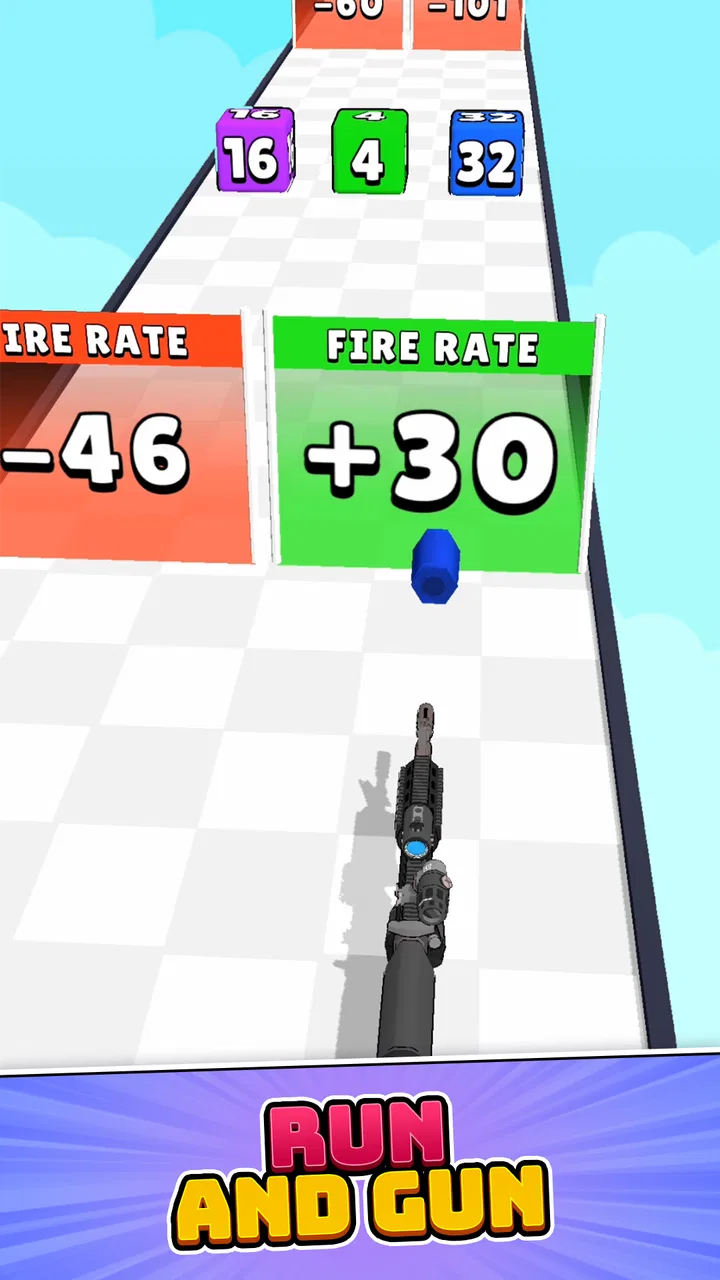
The strongest part of the experience is how quickly the main purpose becomes understandable. The screen is focused on the shooting task, and the connection between clearing balls and improving the weapon is easy to grasp. I did not need to spend much time learning a fictional world or deciphering a dense role-playing interface before getting into the action. For players who prefer visual goals over written instructions, that is a meaningful advantage.
The game’s short description calls it “Weapon Ball Shooter,” but that label does not fully explain the rhythm of play. In practice, the appeal comes from repeating a compact loop: enter the action, shoot, watch the field change, and look for the next improvement. This makes the game less demanding than a traditional role-playing title with dialogue trees, equipment inventories, character builds, and lengthy missions.
That streamlined structure can also help people who find crowded menus tiring. Someone who wants a game that can be understood without studying several screens will probably feel comfortable here. I would especially recommend it to a younger player or a casual player who enjoys visible progress but does not want to manage a complicated character sheet.
There is a trade-off, though. Clear navigation is not the same as deep navigation. Players who enjoy comparing many weapons, arranging detailed loadouts, or making meaningful tactical choices may find the experience narrow. The weapon-upgrade idea gives the action a sense of development, but it does not turn the game into a full-scale role-playing adventure. I see it as a light role-playing wrapper around a shooting loop, not as a replacement for a deeper RPG.
Why the upgrade rhythm matters
The most useful way to approach the progression is to treat weapon improvements as a pacing tool rather than something to chase obsessively. When the action starts to feel slower, an upgrade can restore the feeling of momentum. I found it more satisfying to use improvements when they solved a noticeable problem, such as taking too long to clear a group, instead of treating every available upgrade as an automatic purchase.
This is one of the game’s less obvious strengths: the upgrade system gives a simple activity a reason to continue. Without that layer, shooting balls would risk becoming a purely repetitive reaction exercise. With it, each short session has a modest goal. My advice is to pay attention to how an upgrade changes the feel of clearing the field, not just to the fact that a number or weapon label has changed. That makes the progression feel more connected to play.
At the same time, the progression is unlikely to satisfy players who want a carefully balanced build system. There is a difference between improving a weapon and choosing between several genuinely different play styles. If you are looking for a game where every equipment decision changes your strategy, a more traditional RPG or a deeper action game will probably be a better fit.
Motor demands and sensory comfort
The shooting format is potentially easier for people who prefer short, direct interactions over extended movement combinations. It does not ask me to remember a long sequence of buttons or coordinate a character across a large map. That can make it more approachable for players who are uncomfortable with complex controls, especially when they want a game that communicates through a single obvious task.
However, simple controls do not automatically mean that every player will find the game physically comfortable. Repeated tapping or aiming can still become tiring, particularly during longer sessions. I would use it in brief bursts rather than assuming that its uncomplicated premise makes it suitable for continuous play. A player with limited hand endurance may appreciate the short-session format but still need frequent pauses.
The visual focus on balls, weapons, and movement also means that the game’s action may be easier for some players to follow than a busy battlefield filled with many characters. On the other hand, anyone sensitive to rapid motion, repeated impact effects, or a visually active screen should test a short session first. I would not describe the game as a calm puzzle experience. Even though the rules are simple, the central activity is still shooting and reacting to objects on screen.
Audio can affect that experience as well. I usually keep the device volume low when playing quick arcade-style games, especially in public places. That makes the game easier to fit into shared environments and keeps the session from becoming disruptive. If you prefer to play without sound, the visual clarity of the shooting task is more important than any atmosphere, so the game remains understandable as a visual activity rather than depending on a story or spoken presentation.
Playing in everyday situations
A realistic use case is a ten-minute wait before an appointment. I can open the game, complete a few rounds of shooting, work toward a weapon improvement, and stop when my name is called. There is no need to reserve a long uninterrupted evening or remember a complicated narrative thread. That makes it more practical than many role-playing games for people whose free time arrives in small pieces.
It also works for someone who wants a low-commitment break after work. I would not choose it when I want a rich story or an emotionally involved adventure, but I might choose it when I want a visible task and a little progression without having to think through a large map. The game’s free entry point makes that experiment easy, although optional purchases should still be considered before handing the device to a child.
The Everyone rating supports its broad presentation, but parents should remember that the game includes in-app purchases ranging from $3.49 to $13.99 per item. That does not make the game unsuitable for families, yet it does make device purchase controls worth checking in advance. A child can understand the shooting loop quickly, and that same simplicity can make it easy to continue playing without thinking about the cost of optional items.
Where it fits beside other role-playing games
Compared with a conventional role-playing game, this title is much lighter on story, exploration, and character management. I do not open it expecting a world to investigate or a party to develop. Its advantage is convenience: I can reach the central activity almost immediately. A traditional RPG is better when I want long-term planning, narrative discovery, and a stronger sense of place.
Compared with a pure arcade shooter, the weapon-improvement layer gives the game a little more direction. There is a reason to return beyond simply beating a personal score, even if the overall structure remains compact. That makes it a reasonable middle ground for players who like arcade repetition but want some form of progression attached to it.
It is also different from a puzzle game. Clearing balls may look visually tidy, but the main satisfaction comes from shooting and upgrading rather than solving elaborate logic problems. If you want quiet, deliberate problem-solving, this may feel too action-oriented. If you want a quick game where the next objective is obvious, its directness is more appealing.
Situational access and session planning
One of the game’s practical benefits is that it does not demand a particular lifestyle around it. I can play privately, during a break, or in a shared room with the sound reduced. The lack of a large narrative commitment means that missing a day does not make me feel lost. For people who find continuity-heavy games difficult to return to, that is a real advantage.
The same quality can make it useful for players who need to control their mental workload. A short, repeatable activity is easier to fit around fatigue than a game that expects constant attention to quests, dialogue, and inventory decisions. I would still avoid presenting it as universally accessible, because comfort depends on the player’s vision, coordination, sensitivity to motion, and tolerance for repetition. Its design lowers some barriers, but it does not remove them.
My preferred routine is to decide on a stopping point before starting. For example, I might play until one weapon improvement or one short break is complete, then put the phone away. This keeps the upgrade loop from turning a planned pause into an unexpectedly long session. It is a small habit, but it makes the game work better for people who want entertainment without losing track of time.
Barriers that remain
The biggest limitation is repetition. Shooting balls and improving a weapon can be satisfying for a while, but the appeal depends heavily on whether that loop continues to feel fresh. Players who need changing objectives, character relationships, or a large variety of environments may run out of reasons to continue sooner than players who enjoy incremental progress.
There is also a possible tension between the free starting point and the presence of paid items. I appreciate being able to try the game without paying upfront, but players who dislike purchase prompts or any pressure around progression should approach it with clear expectations. The in-app purchase range is not a minor detail for families or anyone managing a strict entertainment budget. I would play the free portion first and decide whether the core loop is enjoyable without spending.
Another barrier is that a simple interface can leave little room for personal adjustment. Players who need extensive control customization, strong visual options, or carefully tailored sensory settings may prefer a title that advertises those tools directly. I would not assume that a clean screen equals a fully adaptable one. The game is approachable because it asks less of the player, not because it necessarily offers a large set of accessibility controls.
Its role-playing label may also create the wrong expectation. If you install it hoping for a substantial adventure, you may feel that the game is too focused on one repeated action. I think it is fairest to judge it as a casual shooting game with progression. Seen that way, its modest scope is understandable; judged against a large RPG, it will feel limited.
Who should try it, and who should skip it
I would recommend it to players who enjoy quick shooting challenges, visible weapon growth, and games that can be learned in moments. It is a particularly sensible choice for someone who wants a free, casual title for short breaks rather than a demanding game that takes over an evening. Younger players may also find the basic objective easy to understand, while adults can use it as a simple way to pass a few spare minutes.
I would be more cautious about recommending it to players who dislike repetitive loops, want a deep role-playing system, or prefer games built around exploration and story. It is also not my first choice for someone seeking a slow, quiet puzzle experience. The action is direct, and the long-term appeal depends on enjoying the cycle of shooting followed by improvement.
Device age is worth considering before installing. The game requires Android 7.0 or later, and its current version is 4.7. For someone using an older Android device, checking the operating system before expecting to play will prevent an unnecessary download attempt. On a compatible phone, the free price makes trying it straightforward, but I would still review purchase settings if the device is shared.
My inclusive verdict
After playing it, I see Gun up Weapon Ball Shooter as an accessible-in-spirit casual game rather than a fully customizable accessibility-focused product. Its clearest strengths are the direct objective, the limited learning curve, and the ability to turn a few minutes into a complete-feeling session. Those qualities support players who benefit from simple navigation, low memory demands, and a game that does not punish an irregular schedule.
Its weaknesses are equally important. Repeated shooting may not suit every motor or sensory preference, the action can become monotonous, and the upgrade loop will not replace the depth of a conventional RPG. Paid items also mean that the free entry point should be paired with sensible purchase controls, especially in family situations.
My final recommendation is conditional but positive: try it if you want a lightweight role-playing game built around shooting and weapon improvement, and approach it as a short-session arcade experience rather than a story-rich adventure. The best way to enjoy it is to use its simplicity deliberately—play in brief sessions, treat upgrades as practical milestones, keep the sound and motion comfortable for your surroundings, and stop when the loop stops feeling rewarding.
Fun Games Teknoloji has delivered something easy to pick up and easy to explain. It will not satisfy every kind of role-playing fan, but for the right player, that lack of complexity is exactly the point. I would keep it installed for quick breaks, while choosing a deeper RPG whenever I want exploration, strategy, or a more substantial sense of progression.
FAQs for Gun up Weapon Ball Shooter
01What is the main objective of Gun up Weapon Ball Shooter?
Gun up Weapon Ball Shooter is an arcade-style shooting game where players aim to hit targets using a variety of weapons. The main objective is to strategically shoot and destroy targets with precision to score points and progress through increasingly challenging levels. Each level offers new obstacles and rewards.
02Is Gun up Weapon Ball Shooter free to play?
Yes, Gun up Weapon Ball Shooter is free to download and play on both Android and iOS devices. However, it offers in-app purchases for various items and upgrades that can enhance gameplay. These purchases are optional and not required to enjoy the full experience of the game.
03What type of weapons are available in Gun up Weapon Ball Shooter?
The game features a diverse arsenal of weapons ranging from traditional firearms to futuristic blasters. Players can unlock new weapons as they advance through levels or purchase them using in-game currency. Each weapon offers unique attributes, making strategic choices vital for success in different stages.
04Are there any ads in Gun up Weapon Ball Shooter?
Yes, the game includes ads that appear periodically during play. These ads help support the free version of the game. Players have the option to remove ads through an in-app purchase, which can provide a smoother and uninterrupted gaming experience.
05Does Gun up Weapon Ball Shooter require an internet connection?
Gun up Weapon Ball Shooter can be played offline, allowing users to enjoy the game without an internet connection. However, certain features, such as updates, leaderboards, and in-app purchases, require an internet connection to function. Playing online ensures access to the latest content and features.
Pros
- Engaging and addictive gameplay.
- Smooth and responsive controls.
- Variety of weapons to unlock.
- Visually appealing graphics.
- Regular updates with new content.
Cons
- In-app purchases can be pricey.
- Occasional ad interruptions.
- Some levels feel repetitive.
- Requires internet for certain features.
- Battery consumption is noticeable.

Gun up Weapon Ball Shooter
Gallery